
Mobility Support for Employees With Static Work Demands
Body Stretching throughout central florida for workplaces where repetitive tasks and prolonged sitting limit employee movement
Assisted stretching sessions address the loss of flexibility and range of motion that develops when employees spend hours in fixed positions. Trained providers guide employees through stretches targeting hip flexors, hamstrings, chest muscles, and spinal rotators—areas that shorten and restrict movement during desk work or repetitive physical tasks. Zen10 delivers this service on-site across Central Florida, integrating it into recurring wellness programs where movement limitations affect comfort and workplace function.
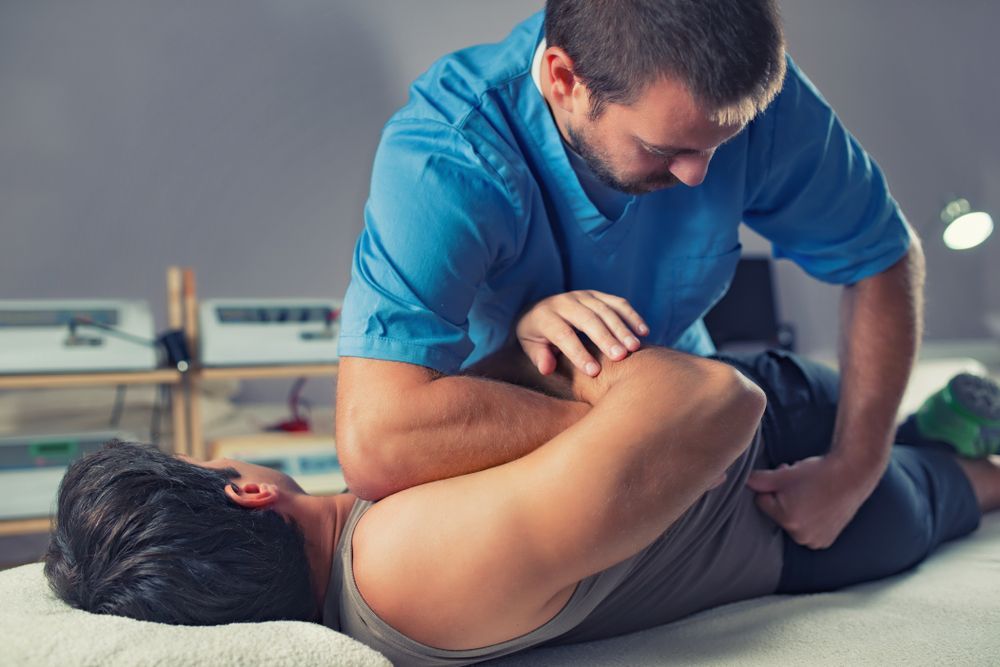
The process involves controlled, supported stretching where the provider stabilizes joints and applies gradual lengthening force to restricted muscle groups. This differs from self-stretching because the employee remains passive, allowing deeper access to tight tissue without compensatory movements that reduce effectiveness. Stretching sessions improve posture by addressing imbalances between shortened anterior muscles and lengthened posterior chains—a common pattern in employees who sit for extended periods.
Schedule a demonstration session to evaluate how assisted stretching fits your employee wellness goals.
What Stretching Actually Accomplishes
Stretching services in workplace settings focus on returning functional range of motion rather than achieving athletic-level flexibility. Providers assess movement restrictions during brief evaluations, then apply techniques that address those specific limitations. Common targets include hip extension (often limited in seated workers), shoulder internal rotation (restricted by keyboard and mouse use), and thoracic spine rotation (reduced by forward-leaning postures).
After consistent sessions, employees report easier movement when transitioning from sitting to standing, reduced stiffness during the workday, and less compensatory strain in areas like the neck and lower back. Improved mobility means employees move through daily tasks with better mechanics—they bend, reach, and turn without the restricted patterns that create secondary discomfort. Stretching also supports better posture habits by reducing the muscular resistance that pulls employees back into slouched or forward-head positions.
Stretching works effectively as part of recurring wellness programs rather than as isolated sessions. Tissue restrictions develop over months or years, and meaningful improvement requires consistent work. Many businesses schedule stretching weekly or biweekly, allowing cumulative progress that employees notice in their daily comfort and function. The service pairs well with massage—stretching addresses length restrictions while massage addresses tension and trigger points.

Answers to Frequent Service Questions
Employers introducing stretching programs want practical details about how the service works within their operations and what outcomes their teams can expect.
What happens during an assisted stretching session?
The provider moves the employee through positions that lengthen targeted muscle groups while the employee remains passive. Sessions last fifteen to thirty minutes depending on how many areas need attention.
How does this help employees who sit most of the day?
Prolonged sitting shortens hip flexors, hamstrings, and chest muscles while weakening glutes and upper back muscles. Stretching addresses these imbalances, making movement easier and reducing the discomfort that comes from restricted postures.
Why is assisted stretching more effective than employees stretching on their own?
Providers stabilize joints and control the stretch angle, which prevents compensatory movements that reduce effectiveness. Employees can relax completely, allowing deeper tissue lengthening than they achieve independently.
How often should employees participate for noticeable improvement?
Businesses in Winter Park that schedule weekly or biweekly sessions see better participation and results. Single sessions provide temporary relief, but consistent work creates lasting changes in flexibility and movement quality.
What credentials do stretching providers have?
All providers are trained in assisted stretching techniques and understand musculoskeletal anatomy. They assess individual restrictions and adjust techniques based on each employee's mobility baseline and comfort level.
Zen10 structures body stretching programs to complement existing wellness initiatives or function as standalone mobility support for your team. Discuss your workforce needs, facility setup, and preferred scheduling patterns to build a program that addresses the movement limitations affecting your employees.